
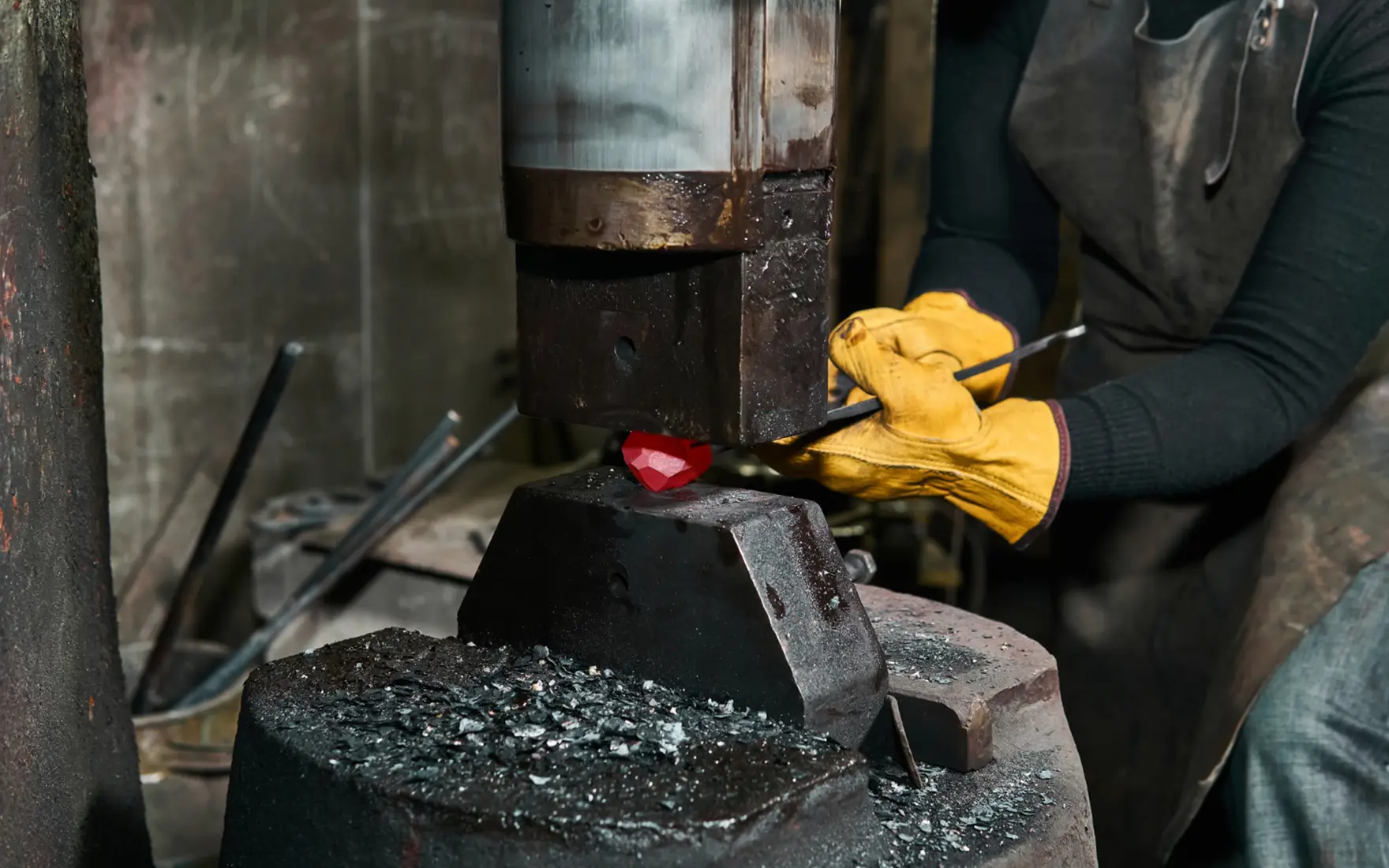
The Rise of the Finish Machined Forging Model: Why Global OEMs Prefer Integrated Forging and Machining Supply Chains for Critical Components

Earlier, forging and machining were rarely done together. One supplier forged the part, another machined it. A forging would move from the press shop to a machine shop, sometimes across cities or even countries, before becoming a finished component. This worked fine for standard parts, but it became harder to manage as components got larger, tolerances tightened, and delivery timelines shrank.

Today, many global OEMs are changing how they source forged components. Instead of buying a rough forging and coordinating machining separately, they are leaning toward suppliers who can take the part all the way to a near net or fully machined stage in one place. This shift is not about convenience. It is about reducing risk, maintaining control, and keeping the supply chain predictable. This preference is increasingly shaping sourcing decisions among casting and forging companies in India that are expanding into integrated manufacturing models.

One big reason for this is traceability. When both forging and machining happen with the same supplier, the full history of the part stays intact. Material details, heat treatment data, and dimensional checks are linked together, making it easier to understand the part and easier to fix issues when they arise. There is less ambiguity about where a deviation occurred and fewer handovers where information can be lost. For critical components used in energy, heavy equipment, or process industries, this continuity matters.

Consistent quality is another reason this model works. When machining is done without a clear picture of how the part was forged, problems tend to surface later. Residual stresses, flow lines, or hardness variations might not be obvious at first, but they often show up during machining and affect how the part behaves. When both operations are planned together, machining strategies can be adjusted to suit the forging, not fight it. This results in better surface finish, longer tool life, and more stable tolerances.

Lead times are also easier to manage when forging and machining sit with the same supplier. Coordinating between multiple vendors often means waiting for slots, transport, and approvals that do nothing but stretch schedules. When both steps are aligned, planning is simpler, rework gets handled faster, and changes can be made without pushing the entire delivery timeline back to square one.

This approach is especially relevant for materials that are harder to process. Many stainless steel forging companies have seen growing demand from OEMs looking for suppliers who understand both how stainless behaves during forging and how it responds during machining. The ability to manage deformation, heat treatment, and final machining as a single process reduces rejection rates and improves repeatability.

From an OEM’s side, this model removes a lot of back and forth. Instead of dealing with two suppliers, there is one supplier accountable for the entire part. If something does not meet requirements, there is no debate about where the issue came from. It gets addressed directly, without finger pointing. There is one owner of the outcome.

On the shop floor, integrated operations encourage better process discipline. Forging parameters are set with machining in mind, not just shape formation. Machining allowances are kept under closer control, and inspection points are set up to match both forging and machining stages. As this becomes routine, teams start to see more clearly how decisions made early in the process show up in the finished component.

The move toward finish machined forgings is not about adding extra steps for the sake of it. It reflects how global OEMs now evaluate suppliers. They look for partners who can manage complexity, control quality from billet to final cut, and deliver components that are ready to assemble, not ready for another handoff.

As components become larger and more critical, this integrated model is likely to move from preference to expectation. For forging companies that invest in both forging and machining capabilities, the opportunity lies not just in supplying parts, but in owning the outcome end to end.
Forgings Behind Mega-Projects: Why Cement, Power, and Infrastructure Equipment Still Depends on Heavy Shafts, Trunnions, and Gear Blanks

Large industrial projects are often measured by capacity numbers. Megawatts generated. Tonnes of cement produced. Throughput achieved. What rarely gets discussed is how dependent all of this scale is on a small set of components that take the most punishment and get the least visibility.

Heavy shafts, trunnions, and gear blanks sit at the centre of cement plants, power stations, and infrastructure equipment. They carry load, transmit torque, and absorb fatigue every single day. When they work, nobody notices. When they fail, entire operations come to a standstill.

In cement plants, rotating equipment runs almost continuously. Kilns, raw mills, and finish mills operate under high loads, dust, and heat, often for years between major shutdowns. The shafts driving these systems are exposed to bending, torsion, and cyclic stress at the same time. Forged shafts are still preferred here because the grain flow follows the shape of the part, giving it better resistance to fatigue and crack growth over long service cycles.

Trunnions are even less forgiving. They support the full weight of massive rotating drums while allowing smooth, controlled rotation. Any internal defect or inconsistency shows up quickly as vibration, uneven wear, or bearing damage. Once that starts, problems escalate fast. This is why trunnions are rarely anything other than forged and why their heat treatment and inspection receive so much attention.

Power generation brings a different kind of pressure. Turbine and generator shafts are expected to run with minimal interruption. A failure does not just mean a repair; it can take an entire unit offline and disrupt supply commitments. Here again, forged components are chosen not because they are traditional, but because they behave predictably under long-term stress. This continued reliance highlights why robust forging solutions remain central to the performance and reliability of large industrial systems.

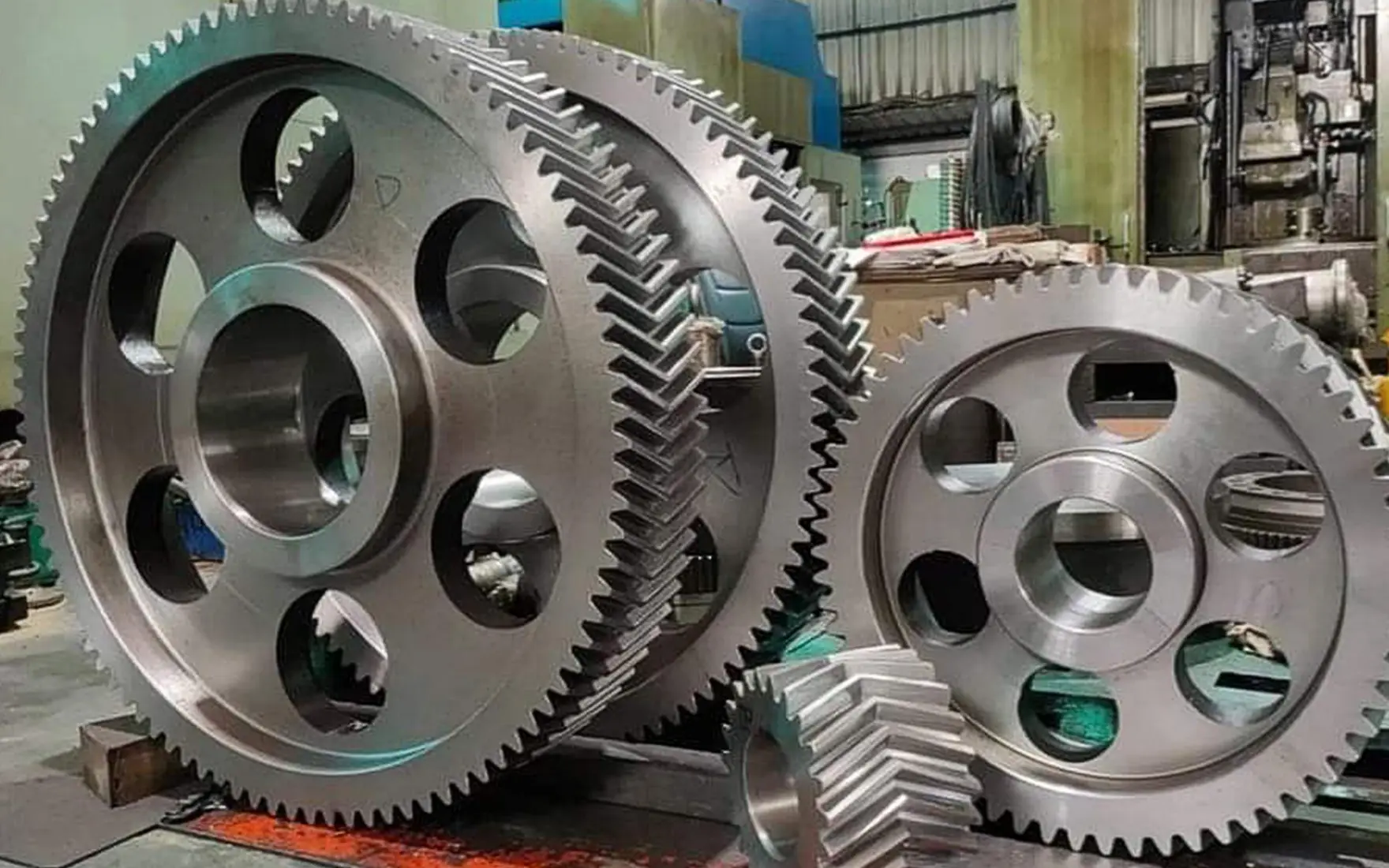
Gear blanks play a quieter role, but they are just as critical. Large gearboxes used in cement, mining, and infrastructure depend on gear blanks that machine cleanly and harden uniformly. Forged blanks reduce the risk of distortion during machining and heat treatment, which directly affects gear life once the equipment is in service.What ties all of these components together is the cost of failure. Replacing a large shaft or trunnion is not a quick fix. Lead times are long, logistics are complex, and downtime can ripple through an entire project.That risk is why OEMs and EPC contractors continue to rely on forging suppliers with proven capability in large, critical sections.

In many cases, they look to the best forging companies in India, not just for press capacity, but for experience handling heavy forgings where mistakes are expensive and learning curves are short. Knowing how much reduction a section needs, how heat should be managed, and where defects are most likely to appear matters as much as the equipment itself.

Despite advances in materials and design tools, the fundamentals remain unchanged. Large industrial systems still depend on strong, reliable forgings at their core. Once a plant is commissioned, shafts, trunnions, and gear blanks fade into the background, yet they have a direct impact on long-term reliability.

As projects become larger and operating windows tighter, the tolerance for failure continues to shrink. Software, controls, and automation can improve efficiency, but they cannot compensate for weaknesses in the components that carry load and transmit motion. That responsibility still rests with heavy forgings.

For cement, power, and infrastructure equipment, shafts, trunnions, and gear blanks remain foundational. They may not drive headlines, but they determine whether a plant runs steadily or struggles with unplanned stoppages. In that sense, the success of mega projects is still built on the quiet reliability of a few critical forged parts.

From Forge to Forecast: How Real-Time Sensors, IIoT Dashboards, and Predictive Analytics Are Reducing Downtime in Heavy Forging Plants

In heavy forging, where precision, power, and uptime are everything, unplanned downtime isn’t just an operational hiccup; it’s a strategic vulnerability. A single hour of stoppage on a forging line can cost firms tens of thousands in labour, lost throughput, and delayed deliveries. That’s why industry leaders are embracing a transformation from reactive fire-fighting to real-time foresight, using real-time sensors, Industrial Internet of Things (IIoT) dashboards, and predictive analytics to anticipate issues before they become production halts.

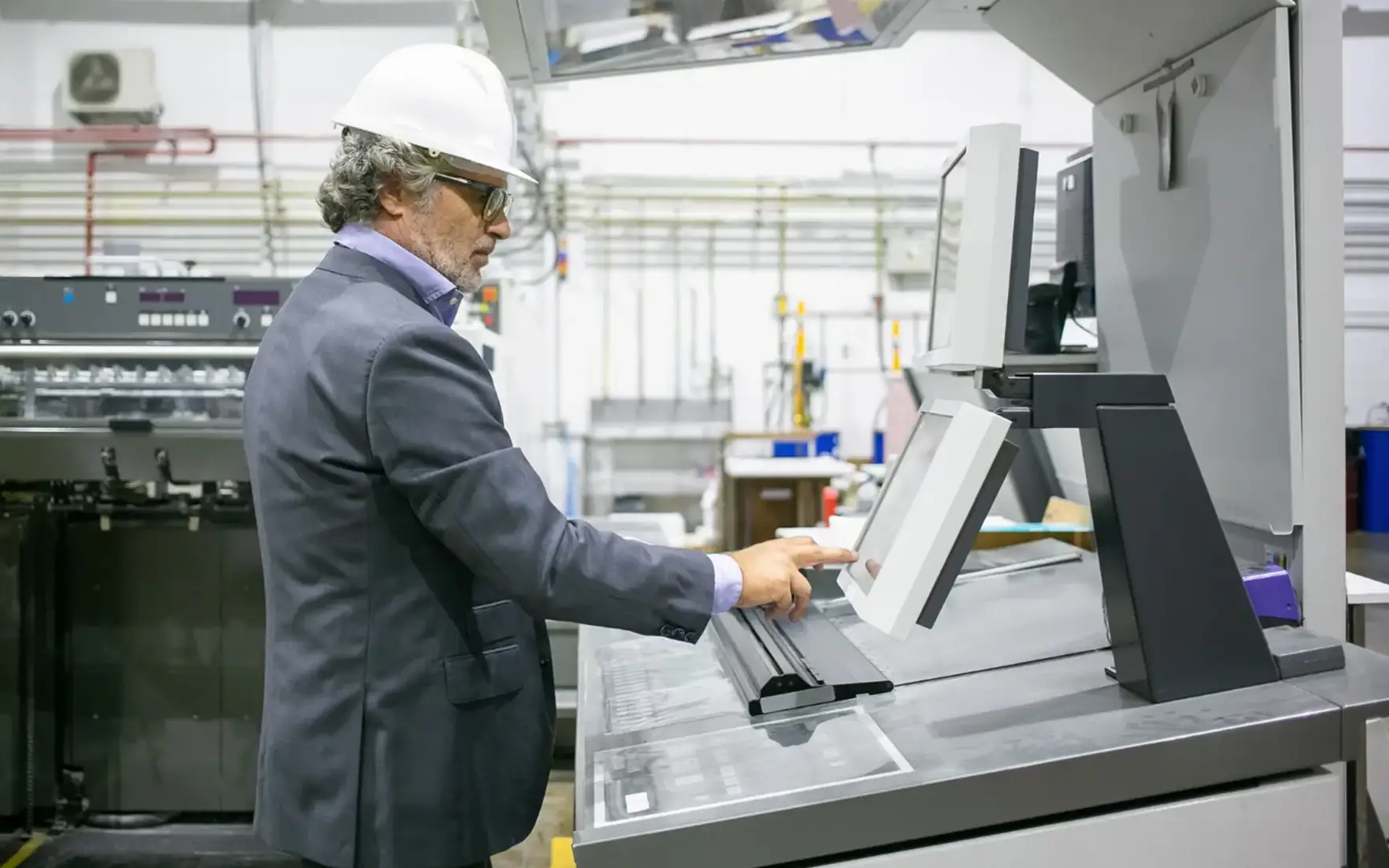
At the heart of this shift is data, but not the kind that sits in reports and gets reviewed weeks later. It’s live, high-frequency data coming straight from the machines that matter most. Today’s IIoT sensors track vibration, temperature, pressure, power draw, and lubrication levels continuously, capturing how equipment behaves hour by hour, shift by shift. This stream of data isn’t background noise. It’s often the first sign that something isn’t right. Machines rarely fail all at once. They usually start by behaving a little differently, more vibration than usual, temperatures running higher, or motors drawing extra power. These changes often show up days or weeks before anything actually stops. When teams can see this information live, they have time to act, adjust settings, replace a part, or plan a short stoppage, instead of dealing with an unexpected breakdown. For a heavy duty forging company, this kind of real-time visibility plays a critical role in keeping large presses, furnaces, and auxiliary systems running reliably.

The real value is in seeing things together. A foreman might notice a rise in temperature in a hammer’s hydraulic system at the same time vibration levels creep up on a die press nearby. On their own, those numbers may not raise alarms. Seen side by side, they point to a problem forming. This kind of shared, real-time visibility makes it easier to act early, before production is forced to stop.

The real game-changer, however, is predictive analytics. By feeding historical and current sensor data into machine learning models and statistical algorithms, plants move from “fix it when it breaks” to “fix it before it breaks.” Predictive maintenance uses patterns in sensor data to forecast when a component is likely to fail, enabling maintenance to be scheduled during planned windows, not during peak production.

This shift is already visible across the biggest forging companies in India, where predictive maintenance is increasingly being used to protect high-value presses, furnaces, and machining assets. Industry research shows that predictive maintenance can reduce unplanned downtime by 30–50% compared to traditional preventive approaches and 70–90% compared to reactive maintenance.

The business case is hard to ignore. Studies show that predictive maintenance can bring maintenance costs down by roughly 18–25% and cut unplanned downtime by as much as half. On the shop floor, that doesn’t show up as a percentage it shows up as more hours of stable production, fewer emergency repairs, and less pressure on teams scrambling to recover lost time. It’s one of the reasons predictive maintenance is quickly moving from “nice to have” to standard practice across heavy industry.

In a heavy forging plant like HFSI’s, the impact is even more pronounced. When you’re running presses rated in thousands of tons and furnaces operating well above 1,000°C, an unexpected stop isn’t just expensive it can be dangerous. Using IIoT systems and predictive analytics helps teams stay ahead of these risks. Bearings get changed before they lock up. Hydraulic systems are adjusted before temperatures climb too high. Small interventions, made at the right time, prevent failures that could otherwise shut down a press or damage critical equipment.

The payoff isn’t limited to avoiding breakdowns. When teams use sensor data to understand how equipment is wearing over time, machines last longer. Parts get replaced when they actually need it, not too early and not too late. That reduces unnecessary spend on replacements, makes maintenance planning more accurate, and helps deploy people where they’re really needed, instead of tying them up in reactive fixes.The transition to these technologies reflects a broader strategic shift: forging not just metal, but operational foresight. In a world where precision and uptime define competitiveness, real-time sensors, IIoT dashboards, and predictive analytics are no longer futuristic tools, they are essential enablers of industrial resilience.

Forging Simulation Goes Mainstream: How FEM Modelling, Process Windows, and Digital Die Design Are Cutting Rejections in Open-Die and Heavy Forgings

In heavy and open die forging, rejection is rarely caused by one big mistake. More often, it is the result of small variables drifting out of control, uneven material flow, temperature loss, improper reductions, or die geometry that does not behave as expected under load. Traditionally, these issues were corrected after the fact, through trial runs, operator experience, and costly rework. Today, that approach is steadily changing.

Forging simulation is no longer a niche tool used only by R and D teams or large automotive suppliers. It is becoming part of everyday decision making in open die and heavy forging operations, especially where component sizes are large, raw material costs are high, and margins for error are slim.

At the centre of this shift is Finite Element Method modelling. FEM allows engineers to simulate how metal flows under heat and pressure before the first billet ever enters the press. Rather than depending only on past jobs and gut feel, teams can see how the material is likely to move, heat up, and deform at each step of the forging process. For heavy forgings, where a single rejected piece can mean significant material and time loss, this visibility makes a real difference. This shift reflects a broader push toward smarter, more controlled forging solutions in India, where reducing rejection and material loss is critical at scale.

One of the biggest advantages of simulation is its role in defining process windows. Forging is never a single parameter operation. Temperature, reduction ratio, press speed, die contact time, and transfer delays all interact with each other. Simulation is mainly used to answer one question early on: where is this likely to fail?

Engineers run a few forging routes, change reductions, let temperatures drop, slow things down, and see how the material reacts. Some combinations hold up. Others do not.

Once those limits are known, the shop floor works with far fewer unknowns. Operators know how far they can push a reduction, when a reheating is necessary, and what needs tighter control. That consistency shows up in fewer surprises during forging and more stable results across shifts and batches.

Die design is another area where this approach pays off. In open die and heavy forgings, even small details in die shape influence how metal flows. A slightly tighter fillet, a different contact surface, or a change in draft can shift strain to areas where defects are more likely. Testing these changes digitally allows teams to correct the design before a die is made. That cuts down on trial runs and avoids learning through costly rejections.

The benefits become even more obvious with repeat jobs. Once a forging route has been proven in simulation and on the press, it becomes a reliable reference. New engineers have something concrete to work from, similar components can be planned faster, and process decisions are less dependent on individual judgement. This builds consistency, which is often harder to achieve in large, custom forgings than in high volume production.

Across the shop floor, this shift is also changing how quality issues are addressed. Instead of asking what went wrong after rejection, teams can trace problems back to specific stages in the simulated process, whether it is excessive strain in a particular zone or temperature dropping below a safe threshold. That makes corrective action more precise and less disruptive.

It is no surprise that more forging operations are adopting these tools. For a forging company in India working in global markets, expectations are clear. Large parts have to meet tight tolerances, rejection rates have to stay low, and quality has to be consistent from one order to the next. Simulation helps support that reality, not by replacing experience on the shop floor, but by giving teams a better starting point before the first heat is taken.

As open die and heavy forgings continue to grow in size and complexity, simulation is becoming less about experimentation and more about control. By validating decisions before steel is heated and presses are engaged, forging plants are reducing rejections, protecting material value, and building processes that are right the first time, not just eventually right.