
Forgings Behind Mega-Projects: Why Cement, Power, and Infrastructure Equipment Still Depends on Heavy Shafts, Trunnions, and Gear Blanks
Large industrial projects are often measured by capacity numbers. Megawatts generated. Tonnes of cement produced. Throughput achieved. What rarely gets discussed is how dependent all of this scale is on a small set of components that take the most punishment and get the least visibility.
Heavy shafts, trunnions, and gear blanks sit at the centre of cement plants, power stations, and infrastructure equipment. They carry load, transmit torque, and absorb fatigue every single day. When they work, nobody notices. When they fail, entire operations come to a standstill.
In cement plants, rotating equipment runs almost continuously. Kilns, raw mills, and finish mills operate under high loads, dust, and heat, often for years between major shutdowns. The shafts driving these systems are exposed to bending, torsion, and cyclic stress at the same time. Forged shafts are still preferred here because the grain flow follows the shape of the part, giving it better resistance to fatigue and crack growth over long service cycles.
Trunnions are even less forgiving. They support the full weight of massive rotating drums while allowing smooth, controlled rotation. Any internal defect or inconsistency shows up quickly as vibration, uneven wear, or bearing damage. Once that starts, problems escalate fast. This is why trunnions are rarely anything other than forged and why their heat treatment and inspection receive so much attention.
Power generation brings a different kind of pressure. Turbine and generator shafts are expected to run with minimal interruption. A failure does not just mean a repair; it can take an entire unit offline and disrupt supply commitments. Here again, forged components are chosen not because they are traditional, but because they behave predictably under long-term stress. This continued reliance highlights why robust forging solutions remain central to the performance and reliability of large industrial systems.
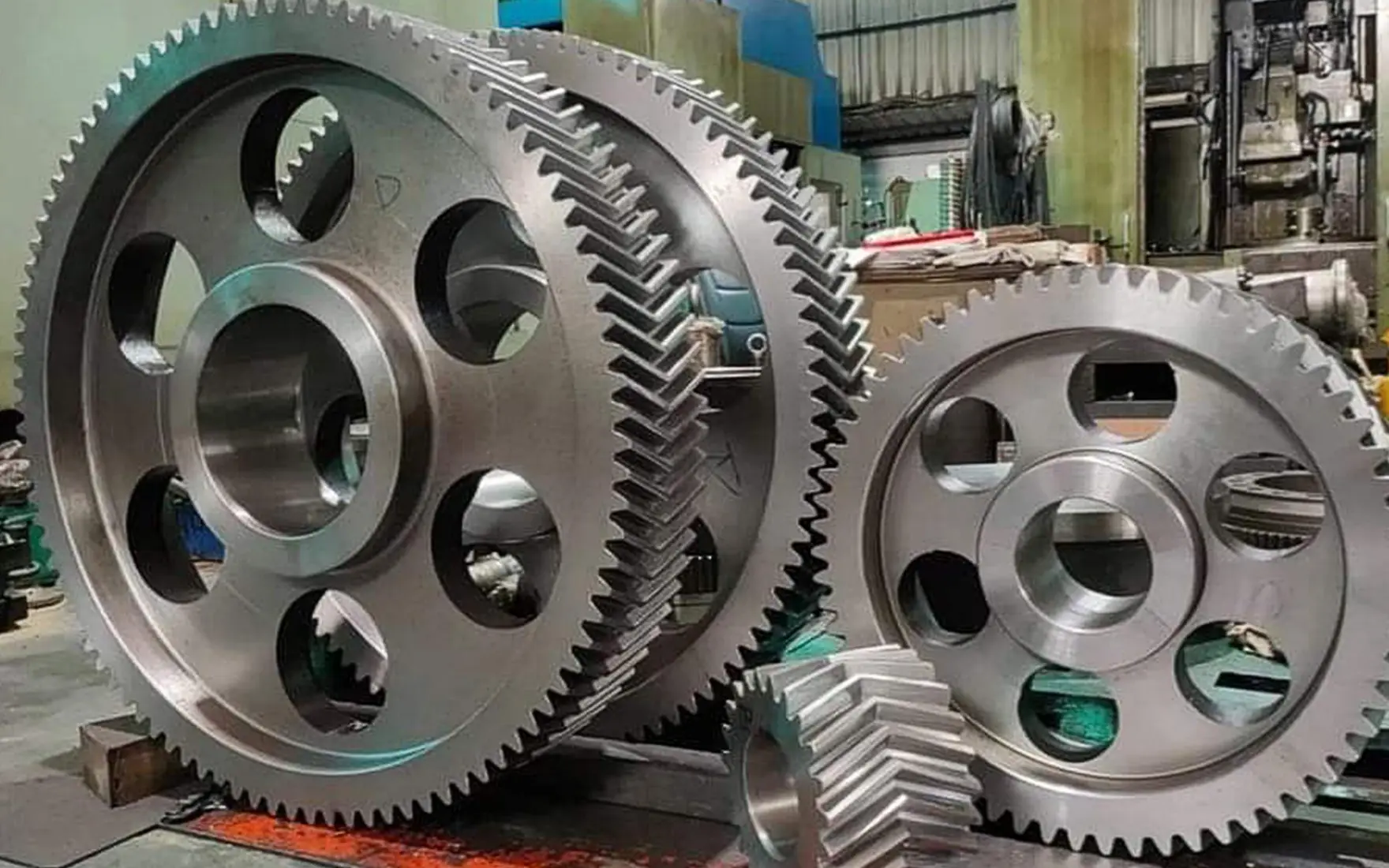
Gear blanks play a quieter role, but they are just as critical. Large gearboxes used in cement, mining, and infrastructure depend on gear blanks that machine cleanly and harden uniformly. Forged blanks reduce the risk of distortion during machining and heat treatment, which directly affects gear life once the equipment is in service.What ties all of these components together is the cost of failure. Replacing a large shaft or trunnion is not a quick fix. Lead times are long, logistics are complex, and downtime can ripple through an entire project.That risk is why OEMs and EPC contractors continue to rely on forging suppliers with proven capability in large, critical sections.
In many cases, they look to the best forging companies in India, not just for press capacity, but for experience handling heavy forgings where mistakes are expensive and learning curves are short. Knowing how much reduction a section needs, how heat should be managed, and where defects are most likely to appear matters as much as the equipment itself.
Despite advances in materials and design tools, the fundamentals remain unchanged. Large industrial systems still depend on strong, reliable forgings at their core. Once a plant is commissioned, shafts, trunnions, and gear blanks fade into the background, yet they have a direct impact on long-term reliability.
As projects become larger and operating windows tighter, the tolerance for failure continues to shrink. Software, controls, and automation can improve efficiency, but they cannot compensate for weaknesses in the components that carry load and transmit motion. That responsibility still rests with heavy forgings.
For cement, power, and infrastructure equipment, shafts, trunnions, and gear blanks remain foundational. They may not drive headlines, but they determine whether a plant runs steadily or struggles with unplanned stoppages. In that sense, the success of mega projects is still built on the quiet reliability of a few critical forged parts.